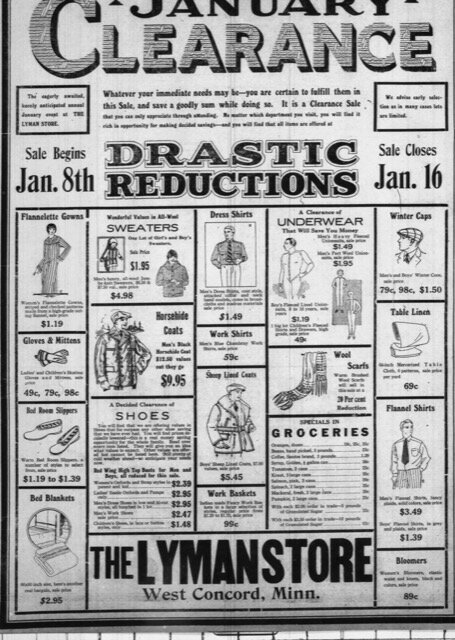
I used to think that 100 years in the past was a very long time ago, but now that I’m three quarters of a century old myself, it doesn’t seem that way anymore. As is so often true, the January West Concord Enterprises were my guides to discovering what people were doing and thinking about 100 years ago.
To set the scene let’s remember that in 1926 Calvin Coolidge was president, a gallon of gas cost 23 cents and a first class stamp cost 2 cents. The average price of a car was $515 and coffee was 49 cents a pound.
In West Concord, like the country at large, automobiles were bringing much excitement to town. In 1926 nineteen percent of Americans owned cars. It was the year that the famous Route 66 was established. Cars were the future and society’s interest reflected that fact. Banks and garages in West Concord were selling auto registration plates for lower fees than the previous year. A Ford plate cost $10, a Dodge $14.70, and a Buick $24.11. The newspaper editorialized that lower fees for plates would unfortunately mean fewer road improvements, too. Cities Service Gas for autos could be purchased at the hometown Blaisdell and Smith Garage. Dodge County (and the rest of the state) was counting traffic on state highways to see how much they were used in the winter—trying to decide if use warranted spending dollars for snowplowing and other winter maintenance. Residents were hopeful because the fight against “snow blockades” was exhausting. Accidents were bound to happen and two Ford cars side-swiped each other in West Concord in front of the gas station. Thankfully, damage was light. The newspaper stated that, “Public interest in the motor car for 1926 seems to exceed that of any previous year.”
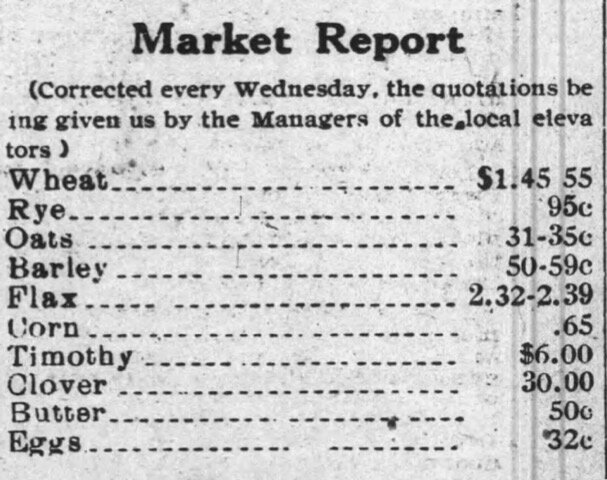
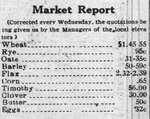
What were local farmers thinking about in January 1926? The evolving trucking industry was making a big difference for them. Trucks and a better highway system were quickly becoming what was called “The Farmers’ Railroad.” 317 truckloads of livestock, a record, drove into the stockyards in South St. Paul in one day. Gopher Oats Seed was abundantly available for spring planting. Developed by the Minnesota Agriculture Experimental Station, Gopher Oats were early maturing, had stiff straw, and a good yield. Eventually though, susceptibility to crown rust led to its demise. Problems were occurring with corn seed that hadn’t germinated satisfactorily the previous year. A quest for finding better corn seed was on, although the local hardware store was taking orders for corn and grass seed. F.S. Vanderhyde used the quiet of winter to attend livestock meetings at the University Farms in the Twin Cities. Corn price at the local elevators was 65 cents a bushel. Out in the country the Minnesota Club of Ellington Township and N.I.S both held their annual oyster dinners, with 48 and 90 people respectively, attending. Imagine 90 people in a farmhouse in January!
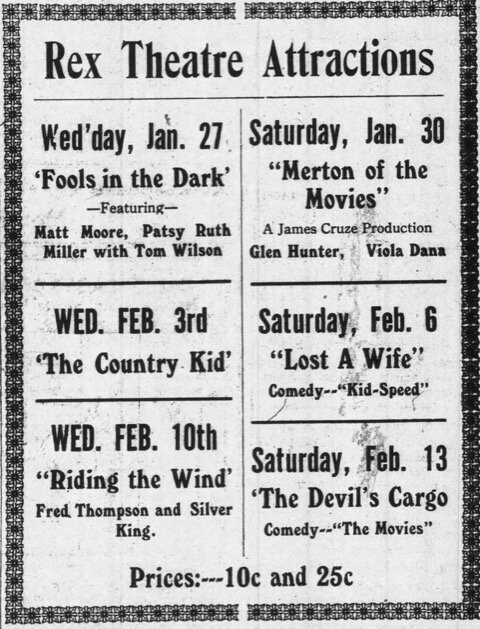
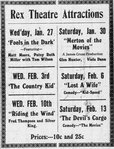
Socially, people were very active in January 1926. There were “jolly” sleigh rides and parties for church youth. Langemo’s Post sponsored a dance to which 150 tickets were sold. The newspaper reported, “The entire evening was one of pleasure to all who were present.” Silent movies were playing at the Rex Theater twice a week, Wednesdays and Saturdays at 8 p.m. Tickets were 10 and 25 cents. There was a violin and choral concert at the Baptist Church. There were Revival meetings at the Methodist Church. The Glad Game Girls met. This was a group for girls inspired by the novel, Pollyanna. Parker Brothers even invented a board game, played somewhat like Parcheesi, but with an overall theme of finding the good in every situation. We can only guess that the Glad Game Girls played it when they met. The Girls Sewing Club also met that January. Study Club was meeting regularly and the Library now had 550 patrons. Without a permanent home, the Library was grateful for contributions that helped it pay the rent. Fifty local WCTU (Women’s Christian Temperance Movement) members met for supper to discuss the work that had been accomplished since the passage of the 18th amendment establishing prohibition.
Radios were at the center of life in 1926. National tests were being conducted to discover why static and fading out of the radio signal happened so often, interfering with home reception. Subscribers to the newspaper were urged to tune into WCCO to hear the President of the Isaac Walton League and the State Game Commissioner discuss appreciation and conservation of nature. The Concord News section of the paper teased that “At Last Bachelor Berry has found a companion—a radio.”
There’s never been a time without wrong-doing and a gentleman who had forged checks at West Concord’s Pyramid Oil Station and two other stores in town was found hiding in a barn, arrested and taken to Owatonna to appear at District Court. His Modus Operandi was to write a $10.00 check for a 75 cent purchase and then abscond with the change.
The Enterprise editorialized about the times. It complained: “It used to be—can she cook? Now it’s—can she Charleston? Skirts are to be shorter—Fashion Note—but how can they be?”
I will leave you with some very good advice from an Enterprise of January 1926: “Come to life and laugh. Laughter is one of the most beautiful things in the whole wide world.”
Happy New Year with every good wish for 2026! As Lord Byron said, “Always laugh when you can. It’s cheap medicine!”