Are you saying to yourself, “Did I read that title right?” Yes, you did. If you’re in my age range and grew up on a farm, you likely have lard memories from your childhood as I do.
In my 1950’s childhood small diversified farms were abundant. Almost everyone had chickens, pigs, and dairy cows. The regular rhythm on the farm meant that when a hog was butchered rendering of lard would soon follow.
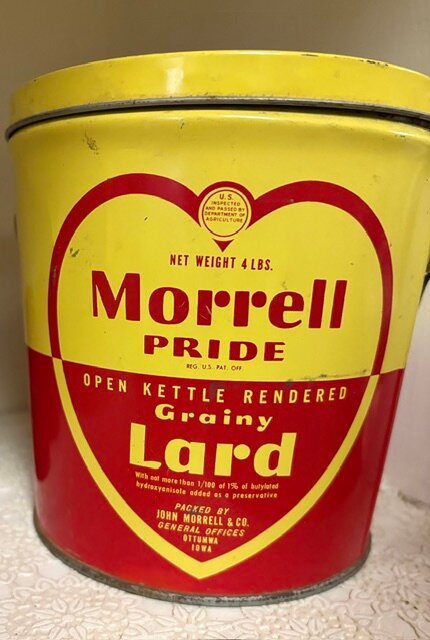
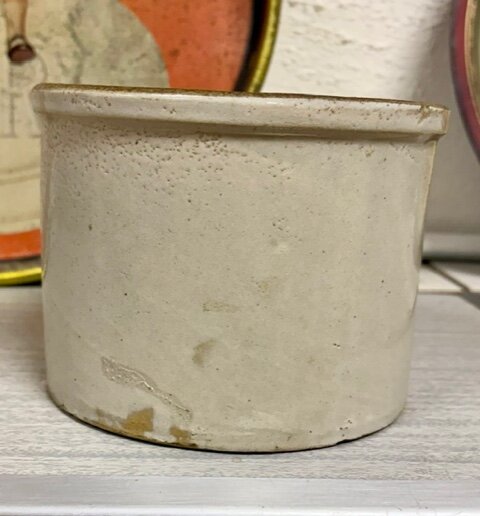
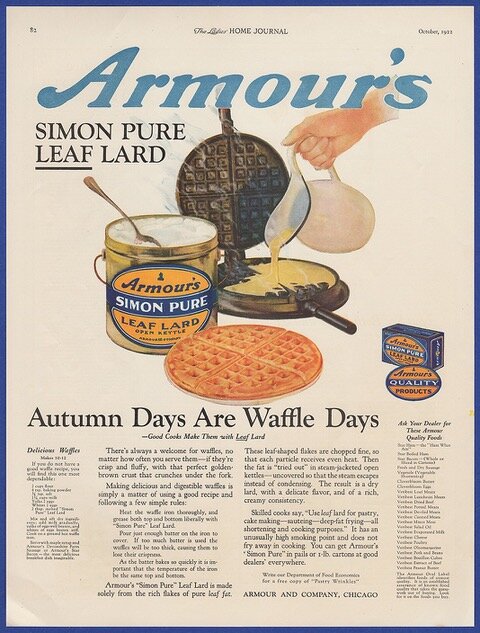
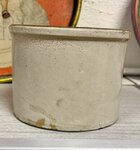
In my mind’s eye, I can still see the stoneware crocks that my mom filled with lard and we used all year. The most desired lard was the leaf lard that was from fat found around the kidneys of a hog. It made the best biscuits and pie crusts. The rest of the fat came from the back and belly of the hog and was used for everyday frying and soap making.
So how did farm women turn raw fat into lard for household use? It was a serious process. First the fat had to be chopped and put into a heavy kettle or Dutch oven.
To keep the fat from scorching before it melted into lard, a cup of water was added to
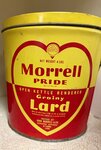
the bottom of the pan. During the process the water evaporated. The fat was melted at low heat and stirred almost continuously. When cracklings floated to the top and the fat was almost clear, the lard was done. To get the best product, the melted fat was strained through layers of cheesecloth or flour sacks and then poured into crocks,
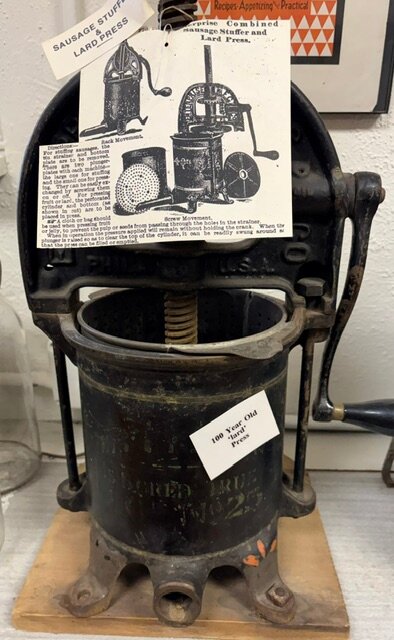
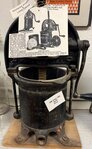
metal pails, or Mason jars. Some homes had lard presses that they used to press the
cracklings and salvage the last bit of fat from the process. The cracklings could be
saved to eat for a snack or used in cooking to make things like “Crackling Cornbread.”
Kept in a cool spot in the house, the lard could stay fresh for a year, unrefrigerated.
My mother didn’t save the cracklings, but tossed them out on the edge of our farmyard. That’s where you could find me—sitting on the ground eating the cracklings
which I found most delicious.
We often had popcorn those days as a snack after my dad finished milking. Out came the lard to be melted in the bottom of the popcorn pan and then the popcorn kernels followed. That was wonderful popcorn.
One of my earliest memories is of my mom making laundry soap in our old, rustic basement. She used my grandma’s recipe and warned me to stay away from her as she worked. That’s because lye was involved. Here’s the Sathrum family recipe for making soap: “5 pounds of lard, melted; 1 quart plus one cup soft water; put one can lye in the soft water and let cool to lukewarm; add the melted lard and two tablespoons powdered Borax into the lukewarm lye water; stir until it leaves the sides of the pan; pour into a box and let harden; cut into squares and let it age; the older it gets the better it is.” Lye/lard soap really was a good cleaner.
There were a great many other uses for lard. Many farm wives canned meat until post World War II. Canned meat covered with lard would keep for 6 months which was very convenient before freezers were common in households. Lard rubbed straight on asphalt, tar, and axle grease stains was recommended as a spot remover before laundering work clothes. Lard melted and mixed with a lump of rosin was recommended for coating machines to protect them from rust.
Lard was used as a home remedy for chest colds. Simply mix one part turpentine and two parts lard, and heat the mixture while taking care because it was highly flammable. When it cooled enough the compound could be rubbed on the chest for relief of cold symptoms.
Chickens who were attacked by insects and parasites were given an ointment on their heads that was made of kerosene and lard. It was said to be effective.
Lard was so much in demand in the early 1900s that in 1912 the Post Office issued
instructions for mailing it. It could be sent no more than 50 miles from West Concord. To be mailed the lard needed an inner cover and a strong outer cover of wood, metal, or corrugated pasteboard. It had to be wrapped so that no lard could escape and must be marked “perishable.”
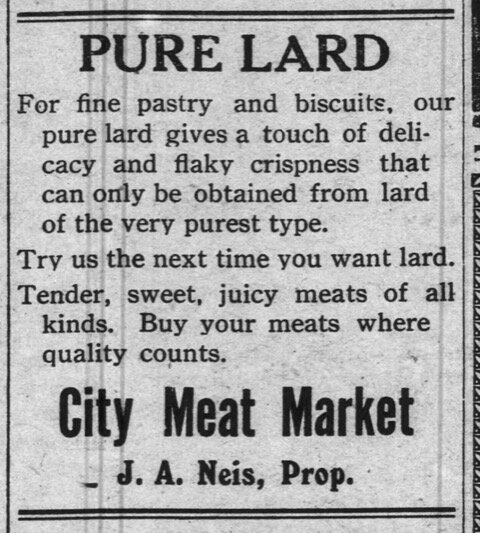
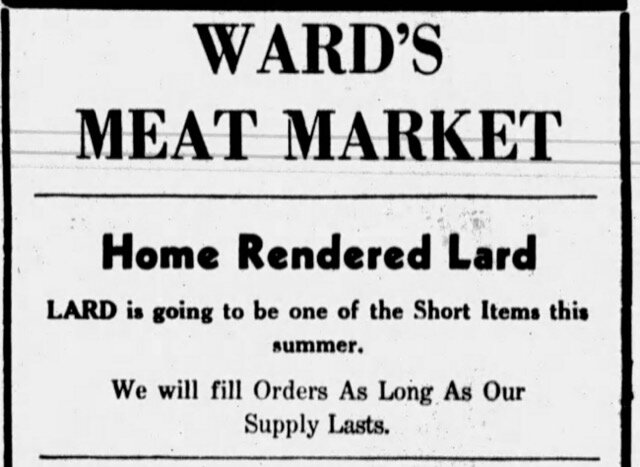
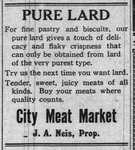
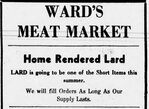
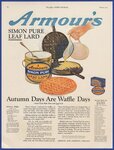
Post World War I the U.S. was exporting 2 billion pounds a year of lard. Think of that! At the July 1939 Concord Township Farm Bureau meeting, three speakers from Hormel suggested that a “Lard Week” be instituted to promote and encourage the use of lard instead of “cheaper and inferior substitutes”. In 1941 the Dodge County Pork and Lard Committee was formed to help consumers realize that lard, in the committee’s view, was the best shortening for the least money.
During both World Wars Americans were asked to use less lard and save it for the soldiers. In 1944 a biscuit recipe using lard was developed to feed the troops. The biscuits had the high calories soldiers needed and stayed fresh for 6 to 9 months. No more hardtack.
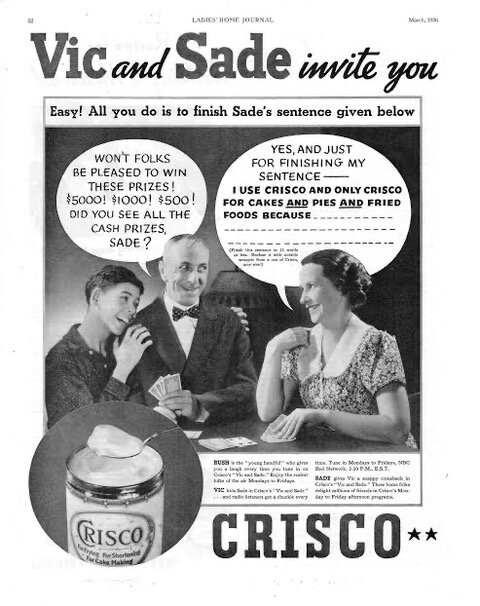
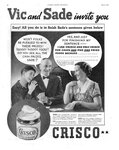
Lard vigorously came under attack when Procter and Gamble introduced its vegetable shortening product, Crisco, in 1911. In 1961 the American Heart Association,
recipient of large contributions from Procter and Gamble, called on Americans to limit animal fats. This powerful anti-lard and butter message gave a huge boost to vegetable shortening products and frightened Americans concerned about their health.
In the late 1990’s scientists made public something new and important they had learned: trans fats hidden in vegetable shortening and margarine were worse for people’s health than lard or butter. Lard made a comeback in culinary circles. As a minimally processed food, it contained zero artificial trans fat, lower saturated fat than butter, as well as some mono unsaturated fats similar to those in olive oil. All the bakers who never gave up using lard in their pie crusts were vindicated.
When Jimmy Hoffa wrote his autobiography in the early 1970’s he remembered the hard times of his childhood. “A slab of bread ‘buttered’ with lard and, if you were lucky
seasoned with salt and pepper was a luxury.” Do you, too, have a lard story?